You can follow a knot diagram perfectly and still end up with something that looks like a tangle. Often the rope is the problem, not your hands. A stiff, slick cord fights every turn and slips the moment you let go; a soft, grippy one stays where you put it and shows you clearly where you went wrong. The first rope does not need to be the best rope you will ever own. It needs to be forgiving. Here is what to look at, in the order that actually matters when you are standing in a shop or scrolling a supplier's page late at night.
Diameter Comes First
Rope and cord are sold by nominal diameter in millimetres, and that single number decides how a knot looks, how much length it eats, and how tired your fingers are by the end of the evening. Labels are approximate. A cord sold as 6 mm might measure anywhere from about 5.5 to 6.5 mm depending on how tightly it is twisted and packed, so if a project needs a precise match, measure a short sample with calipers before committing to a spool.
What each range does well
- 2–3 mm: jewellery, tiny decorative knots, gift wrapping. Lovely results, but fiddly, and mistakes are hard to see.
- 4–5 mm: the best beginner range for most people. Keychains, plant hangers, lanyards, small wall pieces. Knots stay legible and your hands survive a long practice session.
- 6–8 mm: satisfying bulk. Coasters, trivets, dog leads, handle wraps, decorative door pulls. Kinder on the hands and easier to photograph, but it eats length fast.
- 10 mm and up: large display knots, bell ropes, furniture accents. The knots get heavy, the strands are unforgiving, and the ends need firm, deliberate finishing.
Length is the hidden cost of diameter. A finished knot is roughly three times the rope diameter across, and it swallows several diameters of length on its way there. In 8 mm rope, a fist-sized decorative knot can use close to a metre before you trim anything. Buy more than you think you need, and buy it in one continuous piece. A join in the middle of a knot is a small misery that compounds with every subsequent turn.
Pick a Fiber You Can Live With
Natural fibers
Cotton is the usual recommendation for beginners, and for good reason. It is soft, grippy and forgiving. It holds an overhand knot without extra fuss, it shows the structure of a knot clearly, and it recovers well when you undo a mistake instead of staying crushed. It also stretches, which matters for anything that will hang, and it can mildew if stored damp in a closed bag.
Jute and hemp are stiffer and coarser. They grip beautifully and give a rustic, almost architectural look, but they are rough on hands during a long session and their shorter fibers shed over your table. Sisal is rougher again. Linen is strong and relatively smooth but usually costs more than a beginner wants to spend on a learning rope.
Synthetic fibers
Nylon is strong, springy and slippery. Knots that hold firmly in cotton will slide in nylon unless you add extra half hitches and leave longer tails. It melts neatly for finishing and shrugs off weather, which makes it a sensible choice for outdoor pieces later on. Polyester behaves similarly with less stretch and better resistance to sunlight. Polypropylene is cheap, floats, and is the slickest of the three, which makes it a poor first choice for learning.
A cotton-polyester blend is a reasonable compromise: less stretch than pure cotton, more grip than pure synthetic. Most beginners do best starting with a cotton or cotton-blend cord in 4–6 mm, and adding a synthetic once the basics are in their hands rather than the other way round.
Stiffness, Twist, and Construction
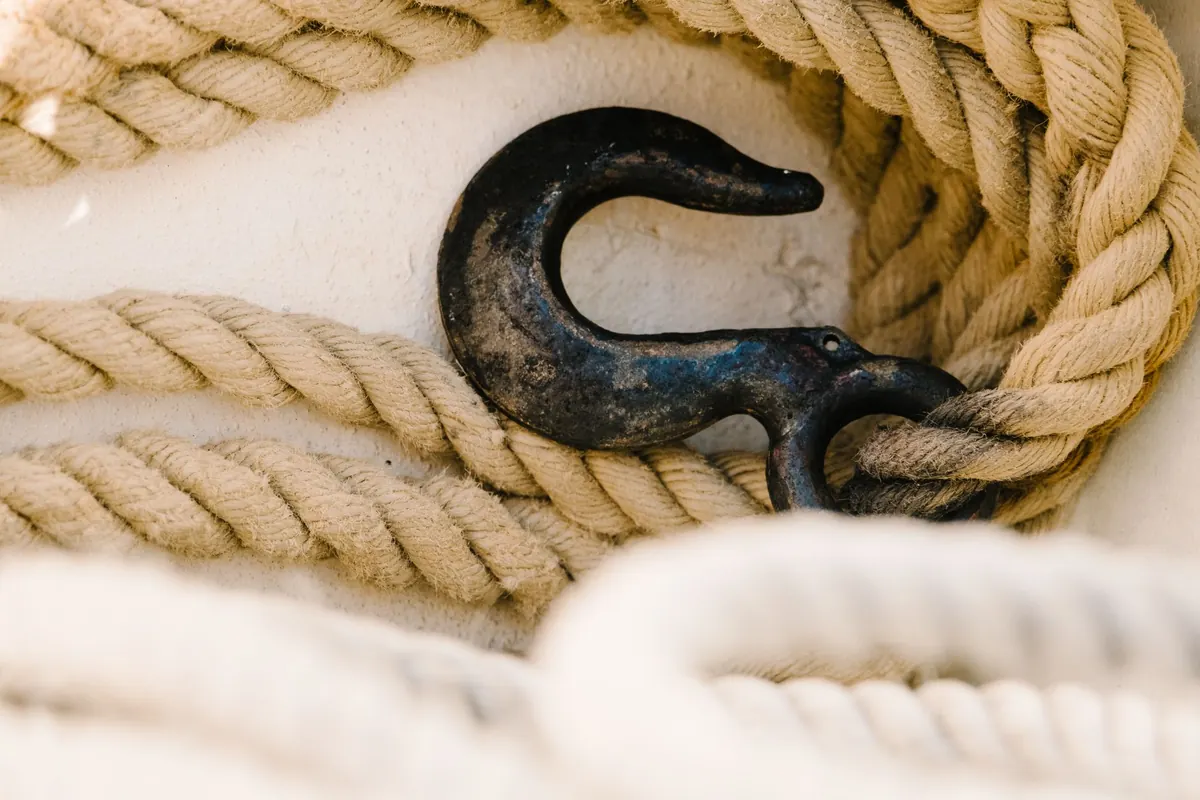
Three-strand twisted rope is the traditional look, the kind you picture when someone says rope. It has a direction of twist, and if you work against that twist the rope kinks and coils on itself; work with it and the strands lie flat and the knot dresses neatly. Twisted rope holds a knot's shape well and splices easily if you want to go that route.
Braided rope, whether solid braid or a sheath over a core, is smoother and more tolerant of tight bends. It does not unravel when cut, which is a genuine advantage when you are learning and trimming constantly. The trade-off is that knots can look rounder and feel less locked, so they need firmer dressing.
New rope arrives stiff from the mill, especially jute and waxed cotton. Working it softens it, and a wash in warm water takes the worst of the stiffness out of cotton. Think about what you want from the finished piece. Stiff rope holds sculptural shapes and stands up in decorative work; soft rope dresses tight and lies flat against itself. Neither is better. They suit different knots.
Texture Decides Whether a Knot Holds
Run a thumbnail along the rope. If it catches, the surface has enough friction to hold a knot in place. If it slides, expect trouble. Comparing two lengths against each other tells you more than a single strand does, because that is closer to what happens inside a tightened knot.
Fuzzy, loosely spun cord grips hard and hides small mistakes. Its downside is that it looks fuzzy in a finished piece and picks up dirt quickly. Slick, tightly spun cord looks crisp but needs longer tails, extra securing knots and more careful tightening. Waxed cotton sits in between: grippy but tidy, and popular for bracelet work. If you buy a slippery cord, plan on finishing every knot with something extra, whether that is a half hitch, a dab of glue or a melted end.
A Beginner's Shortlist, and How to Test It
If you want a starting point rather than a decision tree, take this to the shop:
- About ten metres of 4–6 mm cotton or cotton-blend cord, in a light colour so you can see the strands.
- Two or three metres of the same diameter in nylon or polyester, for comparison.
- One metre of jute, if it is available, just to feel how different a coarse fiber is.
Then spend five minutes testing before you commit to a large spool:
- Tie an overhand knot, a figure-eight and a square knot in each sample.
- Pull each one tight and look at whether the knot dresses evenly or fights you.
- Hang a modest weight from the tightened knot for a few minutes and watch for creeping.
- Undo everything and see whether the rope has recovered or stayed kinked.
- Coil the length loosely and check whether it twists back on itself as it relaxes.
A rope that passes all five is a rope you can learn on. One that fails two or three is still useful, but it will teach you frustration along with technique.
Before You Buy: A Short Practical Checklist
Start small. A short length of two or three candidates beats a single large spool of the wrong thing, and leftover cord always finds a use in keychains and test pieces. Run the whole length through your fingers before cutting it, looking for joins, splices and thin spots that will fail inside a knot. Match your finishing method to the fiber: synthetics melt, cotton and jute need whipping, glue or a simple stopper knot. Store everything dry and out of direct sunlight, and keep the rough fibers for short sessions or wear gloves.
The right first rope is the one you can undo. Once your hands know how a well-tied knot should feel, moving to finer cord, stiffer rope and slicker synthetics stops being a gamble and becomes a choice.
Photo: Rachel Claire / Pexels