There is a specific disappointment that comes from opening a box you packed a year ago and finding a coil of cotton cord fused into a knot the size of a fist, or a finished wall hanging with a pale stripe across it where the light hit. Rope and cord are patient materials, but they are not indifferent. They take on the shape they are stored in, they drink the air around them, and they fade quietly in the sun. None of this is difficult to prevent. It just has to be decided before the box goes on the shelf.
Coil With the Twist, Not Against It
Every cord has a temperament. Cotton and jute are twisted tightly in one direction, hemp is often looser, and nylon paracord holds a set almost like wire. Wind any of them against their natural twist and you are teaching the cord to kink. It will remember that lesson for months, and you will meet it again in the middle of a project when the last thing you want is a stubborn loop.
To find the direction, hold a two-foot length loosely between both hands and let it hang. It will rotate slightly one way or the other. Coil with that rotation.
Loops, not wraps
Keep the loops open. Four inches across is a reasonable minimum for 3 mm cord; go wider for 6 mm and above. A tight radius becomes a permanent bend, and a permanent bend shows up as a flat spot in a wrap or a weak point in a splice. As you coil, let the loops stack slightly offset rather than building a perfect cylinder that presses the cord against itself.
The figure-eight for long lengths
Anything over about fifty feet is worth winding in a figure-eight: hold the hank in one hand, take the working end around your thumb and little finger, and alternate the direction each pass. The crossings prevent twist from accumulating. For shorter lengths, a plain hank finished with a loose tie is fine. Tie with a scrap of the same cord, cotton twine, or a velcro strap. Rubber bands leave sticky residue on natural fibers and dry out into brittle rings that crumble onto your supplies.
Hang what you can
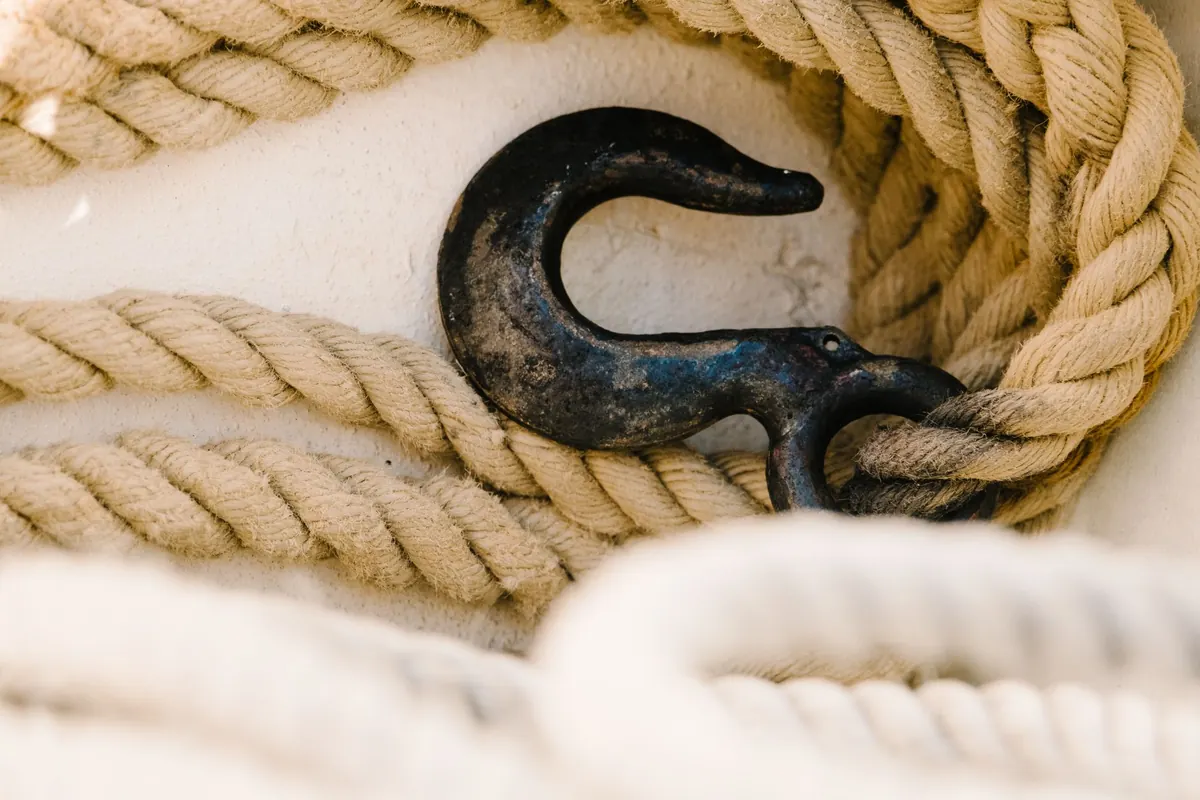
A pegboard or a row of hooks is the kindest storage for long lengths. Gravity keeps the cord straight, and hanging keeps it off the floor where dust and damp live. Reserve the hooks for cord you actually use; a hank that hangs untouched for two years collects a fine grey coat of dust that works its way into the fibers.
Leftovers under three feet are the ones that destroy a drawer. Wind them onto a notched card, a wooden bobbin, or a piece of scrap cardboard, and tuck the tail under the last pass. A jar of loose ends looks charming and behaves like a bird's nest.
Label as if the Answer Matters Later
It will. Six months from now you will have three whites that are not the same white, two cords the same diameter but different twist, and no memory of which one took the dye unevenly.
A useful tag carries four things: fiber, diameter, remaining length, and the date you bought it. Write the remaining length rather than the original one, and update it when you cut a piece off. Pencil on card stock survives heat and humidity better than most inks and does not bleed through the fiber. Punch a hole, loop it through the tie, and you are done.
For bins, tape a list to the outside and rewrite it when the contents change. For finished pieces, keep a small note of fiber, date finished, and whether the piece has been washed. A short tag stitched to the back of a wall hanging saves a lot of guesswork when someone asks how to clean it.
Moisture Is the Quiet Problem
Mildew announces itself with smell before it shows as fuzz or spotting, and by the time you see the grey bloom on cotton or jute, the fiber has already been sitting wet for a while. Natural fibers are the vulnerable ones. Synthetics resist mildew themselves but will happily trap moisture against a natural cord stored beside them.
- Dry before storing. Cord that was steamed, washed, or used outdoors should dry fully in moving air, out of direct sun, before it goes into any container.
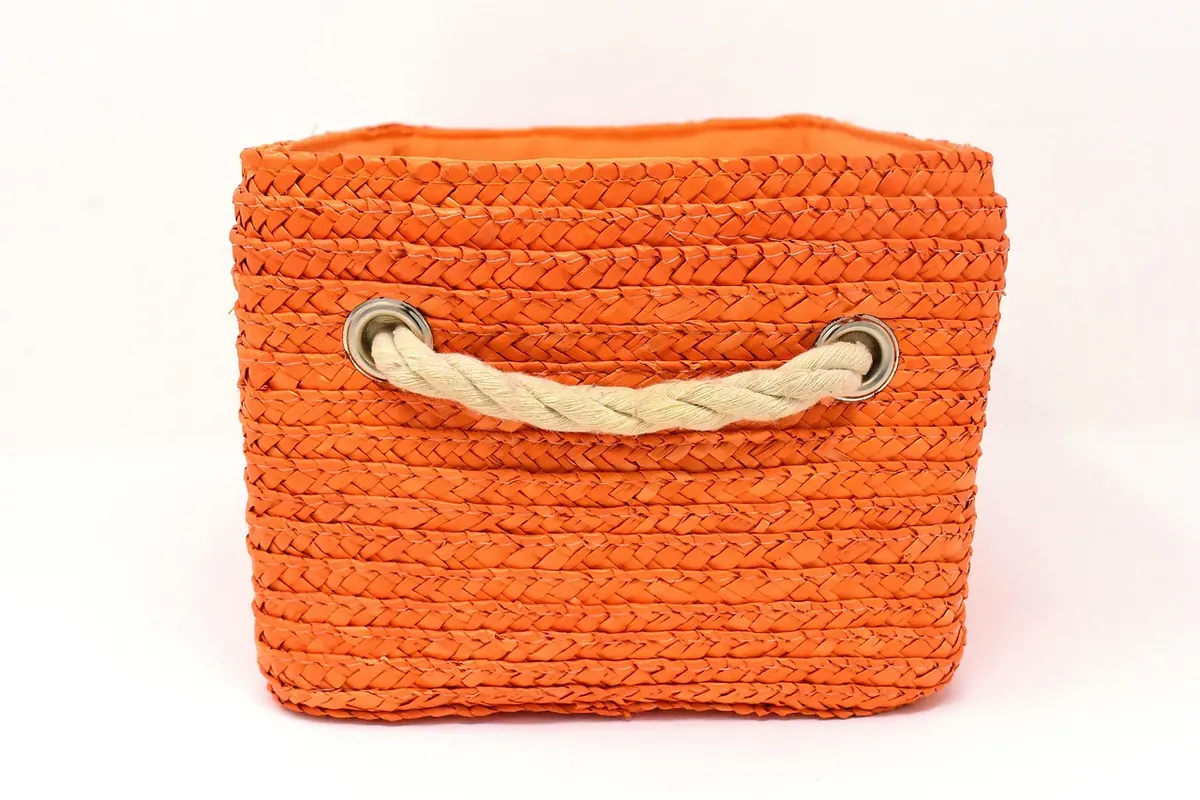
- Choose breathable for natural fibers. A cotton pillowcase, canvas tote, or paper bag lets moisture escape. Sealed plastic is fine for bone-dry synthetic cord and a bad idea for damp hemp.
- Lift off the floor. Concrete wicks moisture and holds it. A shelf a few inches up is enough, and it keeps the cord away from the wall as well.
- Add a buffer to closed bins. Silica gel packets help in sealed containers; recharge them according to the package directions rather than leaving them in forever.
- Skip the garage corner. Unheated, unventilated spaces are where mildew starts.
If you find a musty piece, isolate it and let it dry outside in the shade. A decorative item that is not load-bearing can often be washed according to its fiber and dried thoroughly. Anything that carries weight, like a plant hanger over a heavy pot or a piece a child plays with, is better replaced than trusted, because mildew can weaken fiber in ways you cannot see from the outside.
Sun, Heat, and the Slow Fade
Ultraviolet light yellows white nylon, dulls dyed cotton, and makes natural fibers brittle over time. Heat does its own work: waxed cord goes tacky in a warm attic, nylon softens, and elastic cord loses its snap. A south-facing windowsill is the worst of both.
Store raw cord in opaque bins or a closed cabinet rather than on open shelving in a bright room. For finished pieces on display, rotate them occasionally and keep them out of the direct beam that comes through a window for hours each afternoon. If a piece must live in a sunny spot, drape a cloth over it when the light is strongest. Keep everything away from radiators, heating vents, and the trunk of a car left in summer.
Finished Work Needs Its Own Rules
Raw cord forgives more than a finished piece does. A wall hanging has shape to hold, fringe to protect, and often a color that took work to achieve.
Hold the shape
Stuff baskets and plant hangers with unbleached tissue or a clean cotton cloth so the walls do not collapse inward. Do not hang a heavy piece from a single point for months on end; the fiber stretches and the shape sags. Rotate the hanging point or rest it flat for a season.
Wrap, don't seal
For long-term storage, wrap in unbleached tissue or a clean cotton sheet and place it in a lidded box. Skip the vacuum bag. Fringe benefits from being rolled around a cardboard tube rather than folded, which leaves creases that never quite come out.
Dust gently
A soft brush works for most macramé. For a deeper clean, stretch a stocking over a vacuum nozzle, use the lowest setting, and keep the tool an inch away from the cord. Dust that sits for years works into the twist and dulls the color.
A Storage Setup You Can Actually Keep
- Sort by fiber first, then by diameter. Mixed bins are the reason you own four shades of off-white.
- Wind each length into a loose hank or figure-eight and tie it with cotton twine.
- Tag with fiber, size, remaining length, and date.
- Choose a container: breathable bag for natural cord, lidded bin for dry synthetic.
- Add a moisture buffer to closed bins and lift everything off the floor.
- Place the bins in a dark, dry spot away from windows and heat.
- Keep a running list on the outside of each bin so you can shop your own shelf before ordering more.
The Ten-Minute Reset
Twice a year, on a dry day, open the bins and do a quick pass. Sniff for mustiness, check for pests and their leavings, look for fading at the exposed edge of a coil, and air anything that feels cool and damp to the touch. Retie the coils that have loosened, update the tags, and pull out the short leftovers that have been sitting ignored.
Those orphans are worth a small project of their own: a set of key fobs, a wrapped bracelet, a plant hanger in three colors. Materials that get handled stay in better condition than materials that get saved. The point of good storage is not a pristine shelf. It is that when you sit down to work, the cord is straight, clean, the right length, and exactly what you thought it was.
Photo: Alexas_Fotos / Pixabay